A Road Through Wilpattu
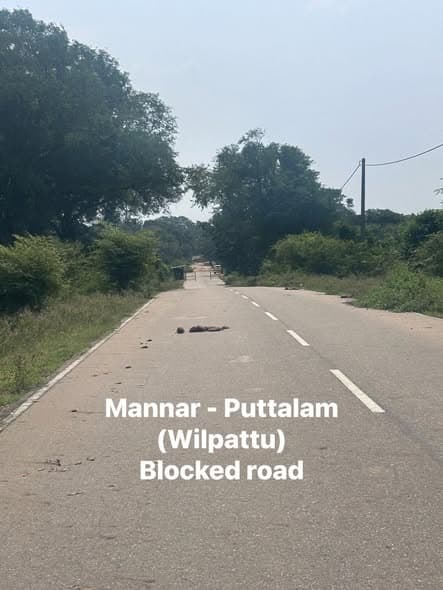
I decided to visit the blocked road area near Wilpattu National Park to better understand the ongoing concerns surrounding access, biodiversity protection, and the challenges faced by resettled communities. Rather than relying only on political debates or media discussions, I felt it was important to observe the situation directly and reflect on what a balanced solution could look like. The Wilpattu road issue has developed over the years into a complex national conversation. After the end of the civil war in 2009, many displaced families began returning to their original lands, particularly in areas connected to Mannar and Puttalam. Access to road networks became essential for rebuilding homes, restarting livelihoods, sending children to school, and reaching health services. For these families, road access is directly linked to dignity and recovery. At the same time, Wilpattu is Sri Lanka’s largest national park and one of its most ecologically significant protected areas. It provides habitat for elephants, leopards, sloth bears, and many bird species. Environmental groups have consistently raised concerns that reopening or expanding road access through or near protected zones could disturb wildlife corridors, increase vehicle traffic, and encourage further encroachment into forest reserves. When observing the blocked road area, the tension between these two realities becomes clear. On one side stands the need to preserve biodiversity and protect a fragile ecosystem. On the other stands the everyday reality of families who depend on connectivity for survival and development. The road is not just infrastructure. It represents mobility, safety, opportunity, and in many ways, post-war justice. Yet it also passes through an environmentally sensitive landscape that requires strict protection. The core issue is not whether development should happen or whether conservation should be prioritized. Both are necessary. The real question is how to design a system that respects ecological limits while also safeguarding human rights. A practical solution would begin with regulated access rather than complete closure or full public opening. A permit-based system for residents, restricted travel hours, strict speed limits, and a ban on heavy commercial vehicles could significantly reduce environmental disturbance. This approach allows essential mobility while preventing the road from becoming a high-traffic transport corridor. Infrastructure improvements should also follow environmental guidelines. Wildlife crossings, clear signage, and monitoring systems could reduce animal-vehicle collisions. Any upgrades must avoid unnecessary widening or expansion that would fragment habitats further. Equally important is transparency in land demarcation. Clear mapping of protected forest boundaries and legally resettled areas would reduce confusion and political manipulation. When boundaries are publicly available and scientifically defined, it becomes easier to hold all actors accountable. Community involvement is another key element. Resettled communities should be included in conservation efforts. Training local youth as wildlife monitors or eco-tourism guides can create employment while strengthening environmental stewardship. When people see tangible benefits from protecting biodiversity, conservation becomes a shared responsibility rather than an imposed restriction. Finally, investment in alternative routes and local services can reduce pressure on sensitive areas. Improving nearby road networks outside core wildlife zones and strengthening local schools and health centers would decrease the need for frequent long-distance travel. In conclusion, the Wilpattu road issue reflects a broader national challenge: balancing environmental protection with social justice in a post-conflict society. My visit to the blocked road area reinforced the idea that extreme positions will not provide lasting solutions. A carefully regulated, transparent, and community-centered approach offers the most realistic path forward. Protecting biodiversity and respecting the rights of resettled communities are not opposing goals. With responsible governance, they can be achieved together.